| Archive Types | Scientific Records • Historical Archives • Creative Works • Social Data • Regulatory Frameworks • Conceptual Ideation • Emergent Phenomena |
| Access Protocols | Biometric Authentication • Encrypted Distributed Ledger • Multidimensional Search Queries • Collaborative Curation Channels • Augmented Reality Data Visualization |
| Interconnections | Scientific Records linked to Historical Archives • Creative Works connected to Social Data • Regulatory Frameworks cross-referenced with Emergent Phenomena • Conceptual Ideation informing Autonomous Systems Protocols • Ecosystem Modeling Simulations integrated with Transhumanist Thought Experiments |
| Specialized Sub-Archives | Quantum Physics Compendium • Ancient Civilizations Codex • Avant-Garde Art Repository • Global Sentiment Analytics • Autonomous Systems Protocols • Transhumanist Thought Experiments • Ecosystem Modeling Simulations |
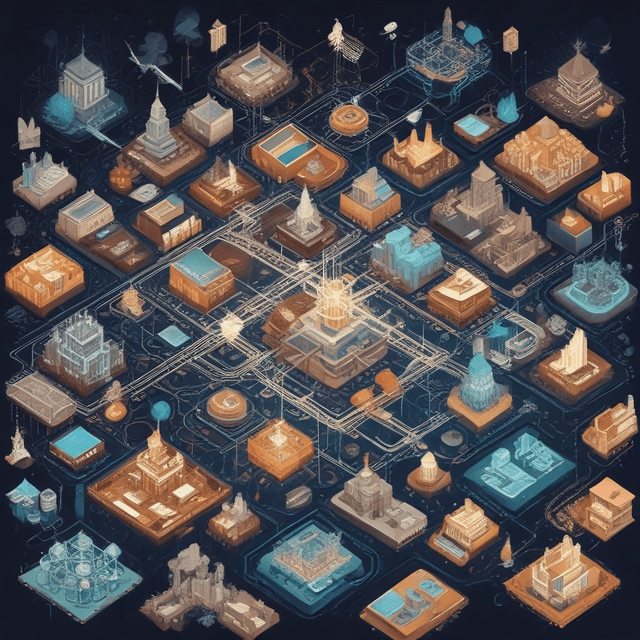
In this realm, information and knowledge are not stored in a typical directory hierarchy, but rather organized into an expansive network of interconnected "archives" that catalog and cross-reference diverse types of data. This archive system serves as the foundational infrastructure for accessing and sharing information across our society.
At the highest level, the archives are divided into broad categories based on the nature of the content, such as:
Within each of these high-level categories, there exists a complex web of specialized sub-archives, cross-referenced indices, and interconnected knowledge nodes. Navigating this intricate system requires understanding the various protocols, access permissions, and search mechanisms unique to each archive.
Gaining access to the archives is a carefully regulated process, with different levels of permissions and clearance required depending on the sensitivity and scope of the information sought. Researchers, scholars, and authorized personnel must undergo extensive vetting and authentication before being granted the appropriate access keys and credentials.
The process of retrieving information from the archives also involves a nuanced set of search and retrieval protocols. Rather than a simple keyword or file-based lookup, users must often navigate a labyrinth of cross-references, contextual filters, and knowledge mapping tools to uncover the relevant data. This ensures the integrity and proper contextualization of the information being accessed.
One of the defining features of this archive system is the way in which information is deeply interwoven and cross-referenced across different knowledge domains. A query in the Historical Archives may yield results that trigger connections to relevant entries in the Scientific Archives or Cultural Archives, allowing for a rich, multidimensional understanding of a given topic.
This interconnectivity is facilitated by advanced indexing and knowledge mapping technologies, as well as the collaborative efforts of archivists, curators, and subject matter experts who continuously work to strengthen the linkages between disparate bodies of knowledge. It is through this holistic, interconnected approach that the archives unleash their true power as a repository of humanity's collective understanding.
While navigating this expansive and intricate archive system may seem daunting, it represents a paradigm shift in how we organize, access, and leverage information. By embracing the complexity and interconnectivity inherent in the archives, we unlock new possibilities for discovery, synthesis, and the advancement of human knowledge.
